Why Couples Therapy

You might be wondering: “Is couples therapy really necessary for us?” The answer is, it depends on where you are in your relationship. Many couples come to therapy when they’ve hit a rough patch or are facing recurring issues, such as communication breakdowns, trust concerns, or simply feeling disconnected from each other. Therapy can also be a preventative measure—just like seeing a doctor for a check-up, a few sessions of therapy can give you tools to keep things running smoothly. But here’s the thing: therapy isn’t just about fixing problems; it’s about strengthening the emotional connection between you and your partner, improving communication, and understanding each other better. It can even help you create a healthier relationship dynamic that supports both of you in the long run.
Why Couples Reach Out for Support
Many couples begin therapy when they find themselves experiencing patterns
- The same arguments or conflict patterns repeating without resolution
- Feeling distant, disconnected, or misunderstood
- Difficulty communicating without defensiveness or escalation
- Rebuilding trust after a betrayal or breach of trust
- Feeling more like roommates than partners
- Struggling to feel emotionally supported or prioritized in the relationship
Couples therapy offers a structured space to slow these patterns down, better understand one another, and begin rebuilding connection.
The Gottman Method
One of the primary approaches I use in my work is the Gottman Method. Developed by Drs. John and Julie Schwartz Gottman, it’s a research-based method that focuses on helping couples build a solid foundation for their relationship. With over 40 years of research behind it, the Gottman Method helps couples learn effective communication, manage conflict, and foster a deep sense of appreciation for one another.
The Gottman Method is that it’s not just theory—it’s based on real science and observations. Couples who use the Gottman Method build stronger relationships by practicing things like active listening, emotional support, and creating shared meaning. Whether you’re navigating a tough argument or just want to deepen your connection, the Gottman Method gives you the tools to make it happen.
Emotion-Focused Therapy (EFT)
Another powerful approach I offer is Emotion-Focused Therapy (EFT), which focuses on understanding and validating the emotions at the heart of relationship issues. Instead of just focusing on behaviors, EFT helps you and your partner get to the root of what’s really going on—your emotional needs and fears. By addressing these core emotions, EFT can help you both learn to respond to each other with more empathy, creating a stronger bond and more fulfilling connection.
EFT is especially helpful for couples who feel stuck in negative emotional patterns. By guiding partners to express their emotions more openly and listen with compassion, EFT helps break the cycle of misunderstandings and conflict. It’s about getting back to a place where both partners feel heard, supported, and valued.
What to Expect in Therapy
Now, you might be wondering: “What actually happens in a couples therapy session?” Each session will look a little different, but the core focus is always on creating a safe, supportive space where both partners can speak openly. We’ll work through things like improving communication, managing conflict, and understanding each other’s needs on a deeper level.
Throughout therapy, you’ll learn practical tools and strategies to take home and apply in your everyday life. Whether it’s practicing active listening or learning how to de-escalate tense moments, we’ll give you the skills to nurture your relationship long after the session ends.
It’s also important to remember that couples therapy is a collaborative process. You and your partner will play an active role in shaping your therapy journey, and we’ll work together to create the kind of relationship you both want to build.
Ready to Take the First Step?
If any of this resonates with you and you’re curious about how couples therapy might help, I’d love to chat! Remember, therapy is a safe space where there’s no judgment—just support, understanding, and a path forward. Whether you’re struggling with a specific issue or just want to strengthen your bond, couples therapy can be a transformative experience.
Feel free to reach out to me with any questions or to schedule a consultation. I’m here to help you and your partner create the kind of relationship that brings out the best in both of you!
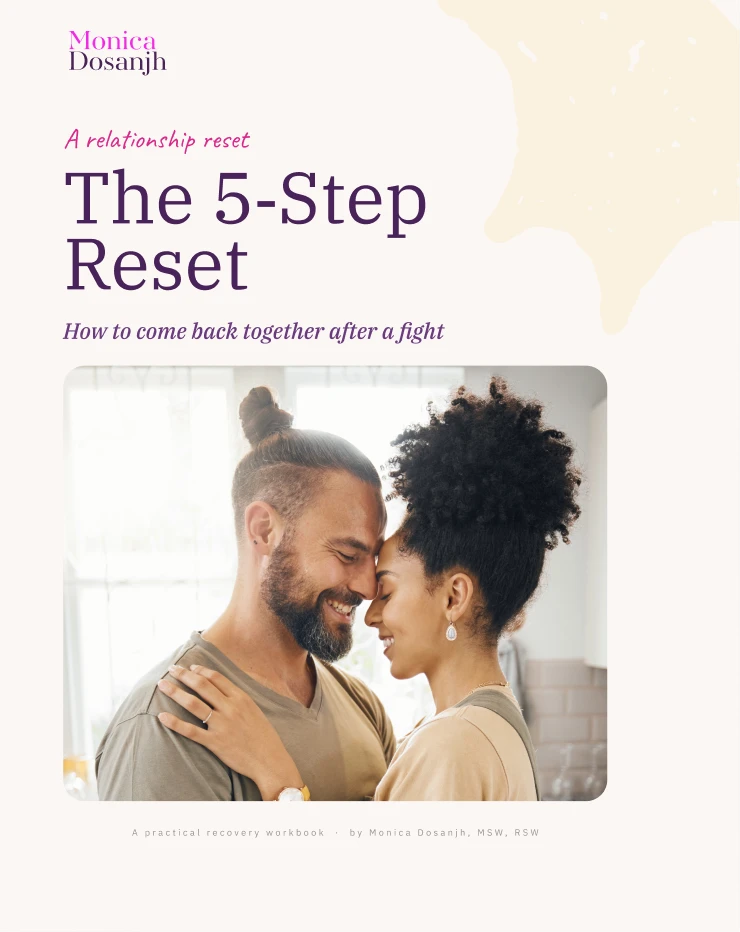
Not quite ready for therapy?
Start here.
Sometimes taking the first step can feel overwhelming. If you're not quite ready to begin therapy, my 5-Step Reset: After a Fight is a practical, self-paced course designed to help couples communicate more effectively after conflict.
- —5 bite-sized video lessons you can watch together
- —Comprehensive 27-page guided relationship course
- —Practical tools you can start using today
Schedule a free call
Let’s connect and take the first step toward the change you’re looking for
Schedule a free 15 minute consultation
